Visualizing Machine Learning: GPU vs Cloud at the Edge
When native machine learning was added to Windows 10, it was a huge technical milestone — but a hard one to communicate. What does "on-device GPU acceleration" actually mean to a business decision-maker?
Making the Invisible Visible
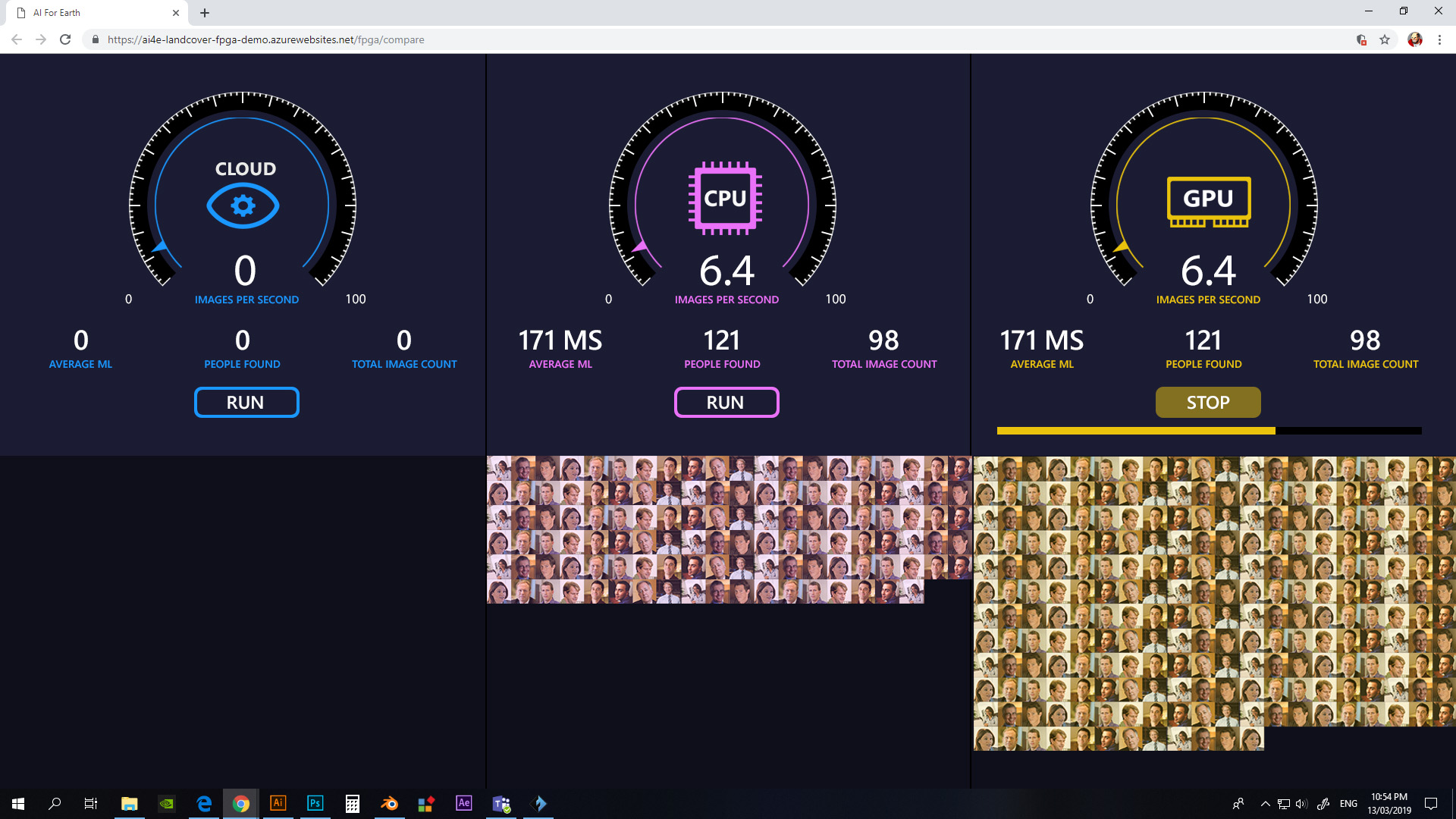
I conceived a demo solution that made the performance difference tangible. We ran the same image recognition task through three pathways simultaneously:
- CPU — the traditional compute path, processing images sequentially
- GPU — Windows ML's native GPU acceleration on the device
- Cloud — sending the same images to Azure for processing
The results played out in real time on screen. The GPU path blazed through images while the CPU crawled and the cloud path stuttered with network latency. The visual was immediate and undeniable: on-device ML wasn't just a spec sheet improvement, it was a fundamentally different experience.
Why This Mattered
Edge computing and on-device AI are now mainstream conversations. In 2018, they were emerging concepts that needed evangelism. This demo became a key tool for the Windows IoT team — used at trade shows, customer briefings, and executive presentations to make the case for investing in edge AI hardware.
The lesson: when you're selling an invisible capability, build something that makes it visible.